01
Design for everyday use
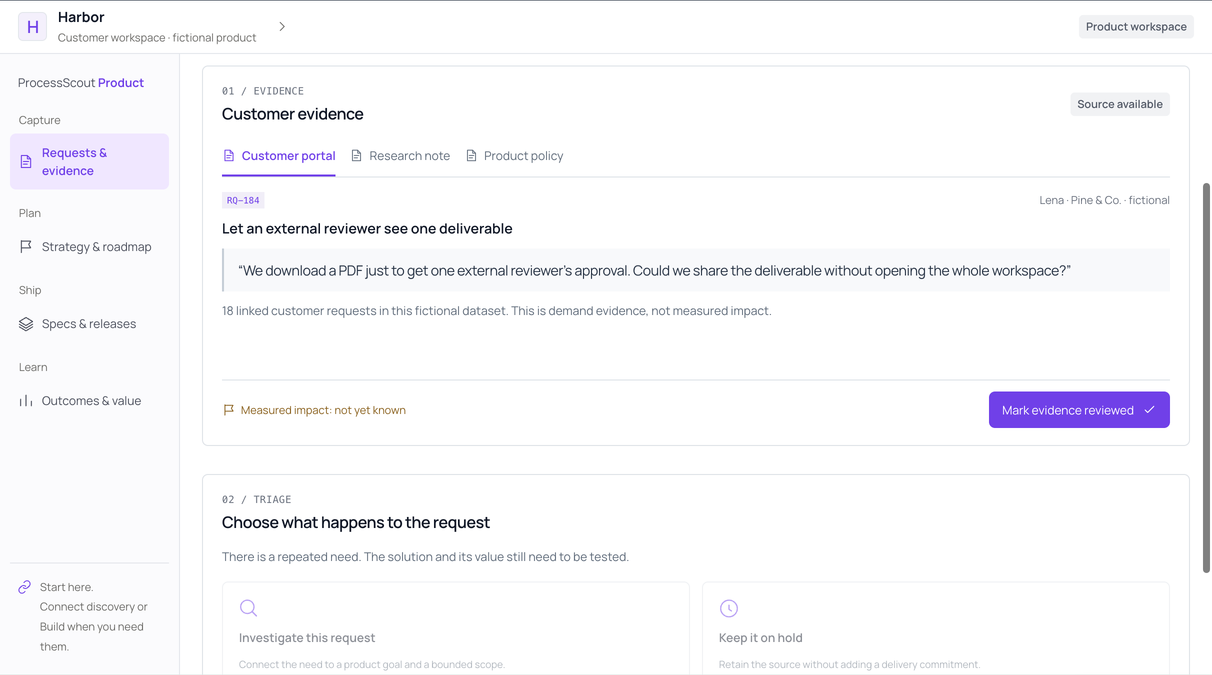
Connect platform configuration to the requests, decisions and exceptions customers handle daily.

Help implementation, customer engineering and Customer Success agree how your platform will work day to day. Carry the workflow, ownership and unresolved questions through rollout and operating handover.
Explore the example. See the decisions behind the delivery.
Connect platform configuration to the requests, decisions and exceptions customers handle daily.
Give Customer Success and operators clear responsibilities, procedures and unresolved readiness questions.
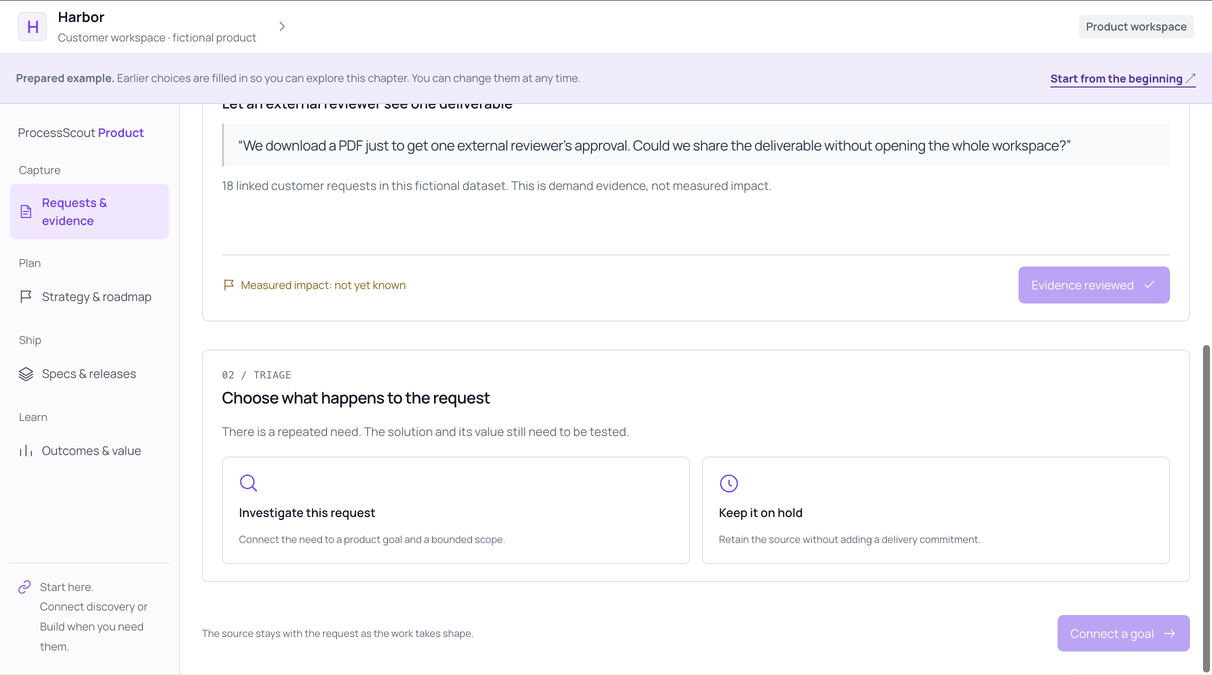
Bring adoption questions and operating feedback into the next reviewed product decision.
For rollouts
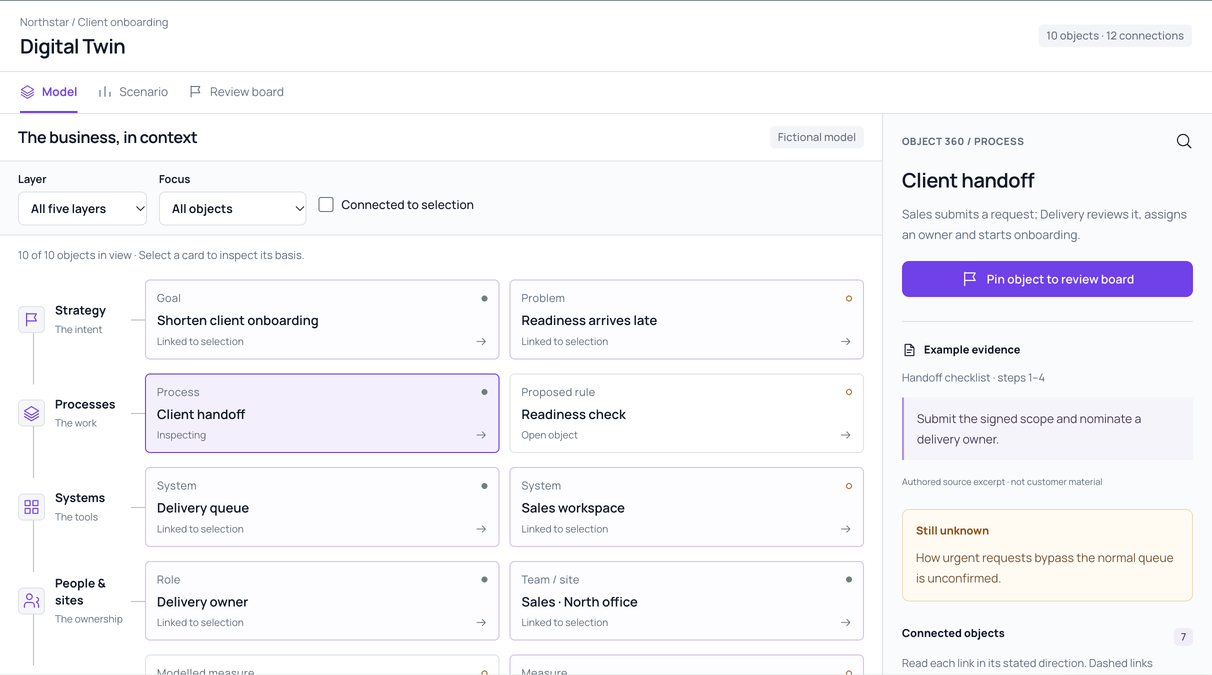
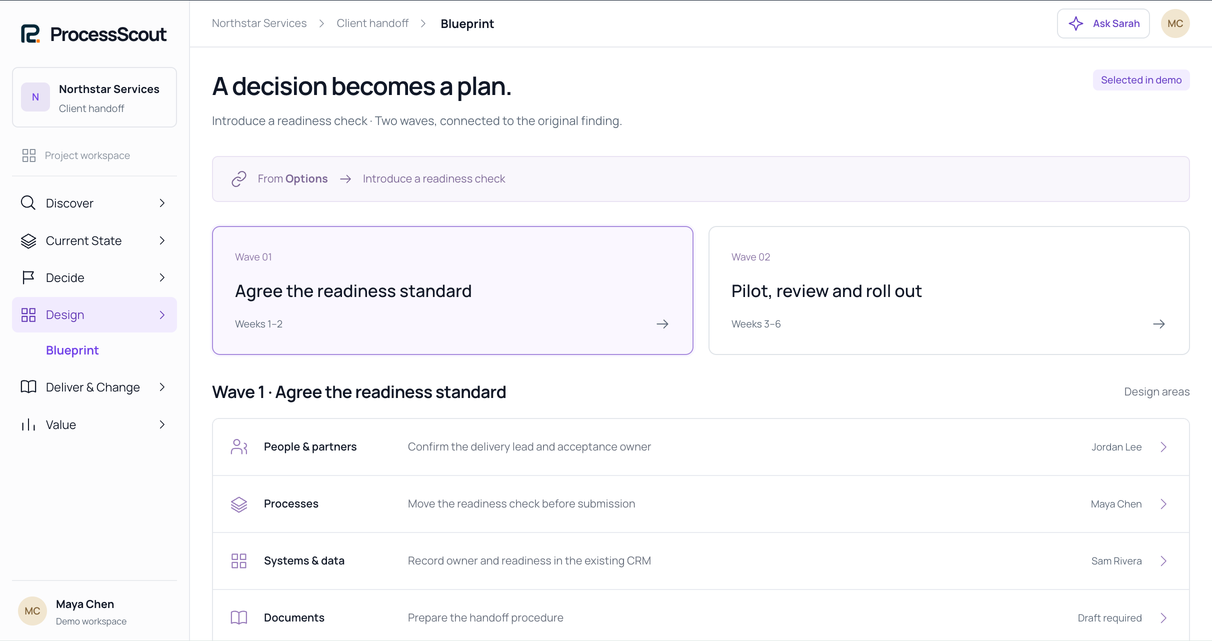
See the customer’s business in context, design the rollout in waves and make every handoff accountable.


Interactive demo · Fictional customer data · No sign-up
Map requests, records, approvals and exceptions into your platform. Confirm configuration and integration choices with product specialists, and name the customer owner for each step.
Customer workflow informs product fit. Product and delivery review standard configuration, an extension, or a product change; no choice is approved by this diagram.
Purchase requests, approval rules and urgent exceptions
Procedure · operating owner · escalation route
Inspect the handoverProposed use of a vendor’s product, subject to capability and implementation review. Access and escalation remain open.
When the policy and workbook disagree, the customer’s decision becomes a requirement, then an operating instruction. Engineers can always trace the change back to the source wording.
Original sources POL-01 and WB-01 lead to authored decision D-01, requirement R-01, and operating instruction O-02. The customer decision is distinct from the supplied sources.
“Above” and “at or above” disagree at USD 10,000.
Which route should the target use at the boundary?
The fictional customer owner chooses the inclusive threshold.
At or above USD 10,000 → finance review.
Prepare the route; a person records the approval decision.
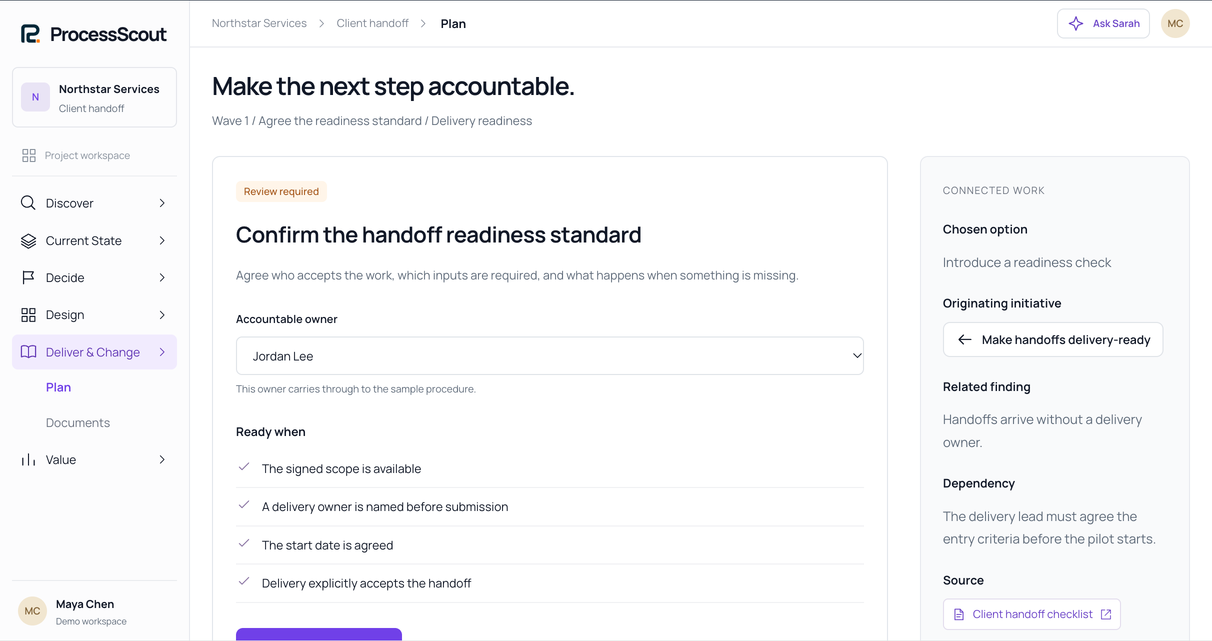
Implementation supplies the reviewed workflow and configuration decisions. Customer Success carries intended use and unresolved issues. Operators need procedures, access and a clear escalation route.
Delivery passes the customer context, requirements and operating instructions to the customer operating owner. Q-04 and Q-05 travel with the packet and remain open.
Prepare the brief, preserve source references and carry open questions into implementation.
Confirm business behavior and acceptance; resolve Q-04 and Q-05 with the relevant specialists.
Confirm architecture, identity/access and implementation checks. Run implementation tests before a readiness decision.
Maintain the procedure and follow the agreed approval route after operational readiness is established.
Fictional role labels. Reviewed rule: R-01 · at or above USD 10,000 goes to finance.
Q-04 · Which identities and access rights will support the workflow?
Owner: Customer process owner
A reviewed rule and a prepared guide are a start, not a go-live. Keep access, testing and escalation on the readiness list until they are actually done.
The prepared brief is input to implementation checks and a later human readiness decision. Identity, access and escalation remain open. A prepared brief is not production readiness.
The customer process owner owns the approval-time measure. Agree the data source, calendar and review window before interpreting results.
The proposed customer measure is business time to an approval decision; the vendor measure is staff hours through review. Baselines remain to collect and actual results are not measured.
Measurement owner: Customer process owner
Define the business-hours calendar, event data source and measurement window before collecting a baseline.
Review cadence and measurement window: To agree
Business-hours calendar, data source and measurement window: To agree.
Measurement owner: Vendor delivery lead
Record total staff effort through review for a comparable workflow. Keep this vendor-effort measure separate from the customer’s operating outcome.
Review period: To agree during pilot scoping
Keep adoption questions and change requests connected to the workflow they affect. Give Product evidence from actual use when reviewing the next release or customer extension.
Product decisions inform customer use. Operating questions and feedback return with customer context to inform the next Product review.
How a pilot works
The brief connects procedures, ownership and measurement planning. Your team owns training, rollout and collection of actual usage and outcome data.
Use the access and export options available in the intended workspace. Source permissions govern what each reviewer can open.
Your team decides go-live from implementation, tests, access and operating readiness. The brief keeps requirements and unresolved questions visible.
We’ll scope the product decisions, operating responsibilities and customer handover your team needs to agree.
Discuss a pilotScope, timing, access and terms are agreed before a pilot begins.
Allow optional analytics to help us improve ProcessScout? Privacy notice